Sweet Bonanza 1000: Feature and Edition Guide
Sweet Bonanza 1000 counts matching fruit and candy symbols across its six-by-five display, rather than requiring the matching symbols to sit next to one another. Winning symbols tumble away, and the bonus feature introduces candy-bomb multipliers that are collected before being applied to the total tumble win. The named release matters: this guide covers Sweet Bonanza 1000, using the developer’s product description and its separate launch announcement. [sweet-product][sweet-launch]
Count matching symbols across the display
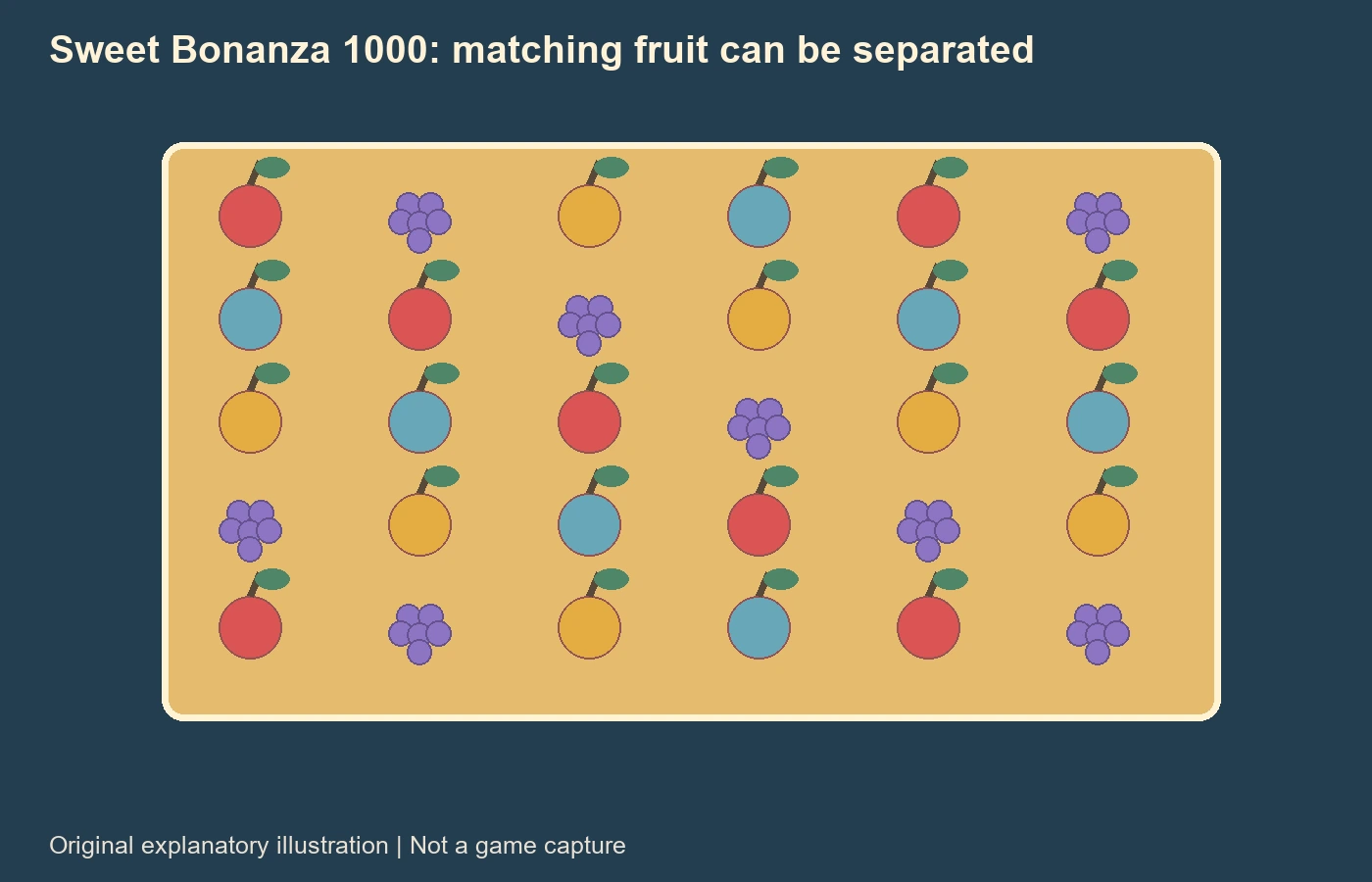
The scattered matching fruit makes the pays-anywhere count visible without implying that the symbols form a connected cluster. Original illustration. Eight matching ordinary symbols are the starting threshold described by Pragmatic Play for this pays-anywhere game. Adjacency is not the organising rule here. A fruit in the upper corner and another of the same type near the lower edge can belong to the same count even though other symbols lie between them. The original board illustration spreads matching fruit across the display so that this difference can be seen without tracing a line. [sweet-product]
For a purely visual exercise, cover the other fruit with a sheet of paper and count only the selected shape. Uncovering the remaining symbols changes the amount of visual clutter, but it does not move the selected fruit. This makes the counting task easier to explain to someone viewing a small image. This exercise explains the static illustration without recommending any action during play.
The launch announcement refers to awards for counts from eight through twelve or more of the same fruit or candy symbol. The correct value for any given group still belongs to the actual paytable. Our illustration includes no cash total because a count without the applicable symbol value is not a complete award calculation. It also contains no highlighted “next” position: there is no predictive path hidden in the picture. [sweet-launch]
Identify what a tumble changes
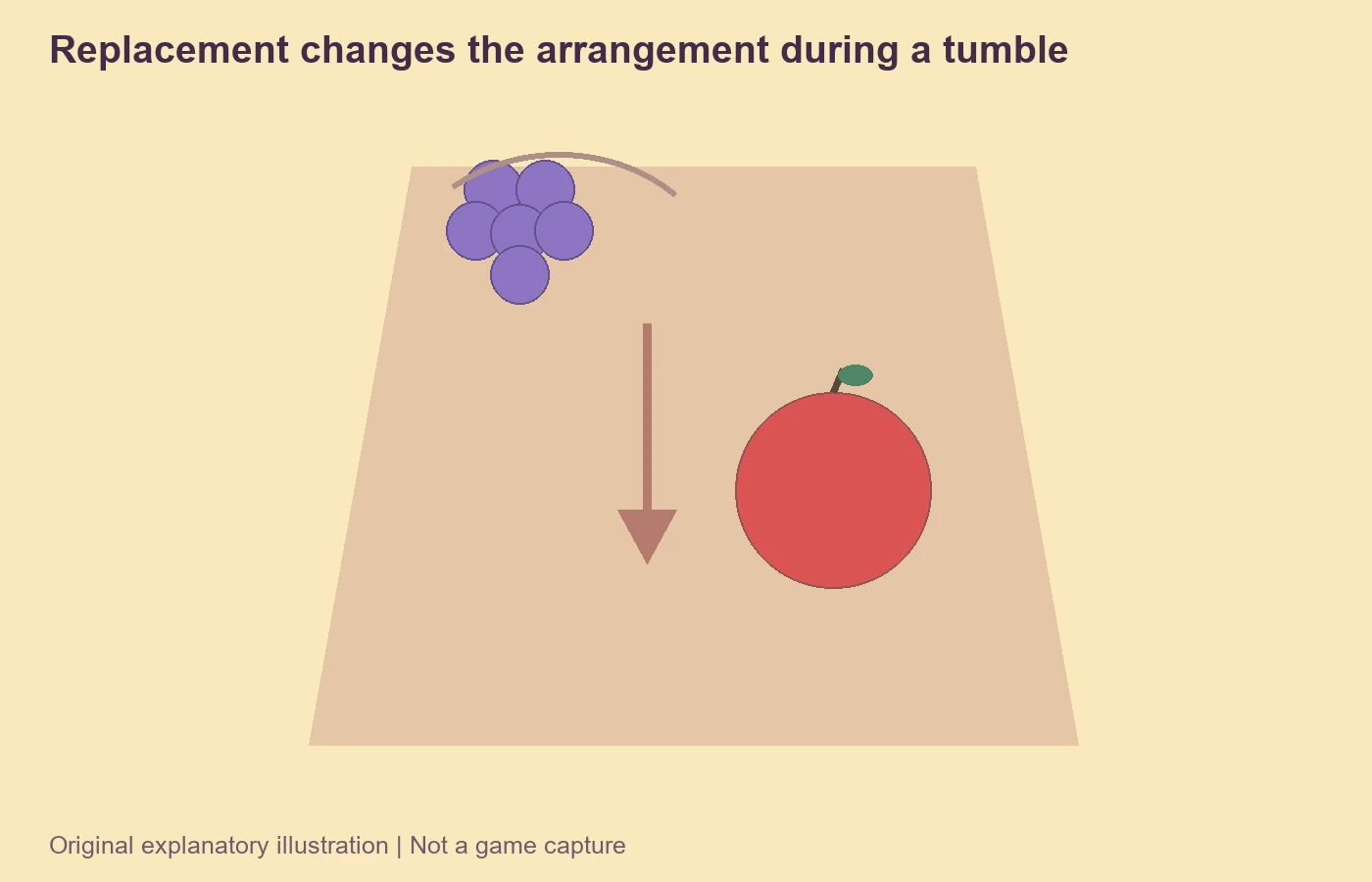
The two heights show a changed arrangement after removal, keeping replacement distinct from the first full display. Original illustration. A tumble changes the symbol arrangement after a winning group is removed. The public description connects matching counts with this replacement action. When writing about the sequence, distinguish the arrangement that produced a win from the later arrangement formed by new symbols. Combining both into a single imaginary board would make it impossible to tell which symbols were counted together. [sweet-product]
The physical-fruit illustration isolates a falling grape and an apple below it. Its purpose is to show replacement and vertical movement, without repeating the complete six-by-five board. Objects are separated by height so the sequence can be understood in a still image. The illustration does not claim a particular animation speed or promise that the next arrangement will contain another winning count.
A total shown at the end of a tumble sequence belongs to that completed sequence. A bright animation somewhere in the middle is insufficient evidence for reconstructing it. A good description therefore names the completed arrangement and the associated displayed result together. When no real sequence has been observed, an editorial diagram should stay an example, as these illustrations do.
The distinction also prevents a common visual confusion between a large group and a large award. A group’s count is only one part of the rule. Its symbol type and the relevant paytable entry matter as well. This reference explains the counting structure while leaving exact award amounts to the developer’s complete in-game information.
Treat lollipops as feature symbols
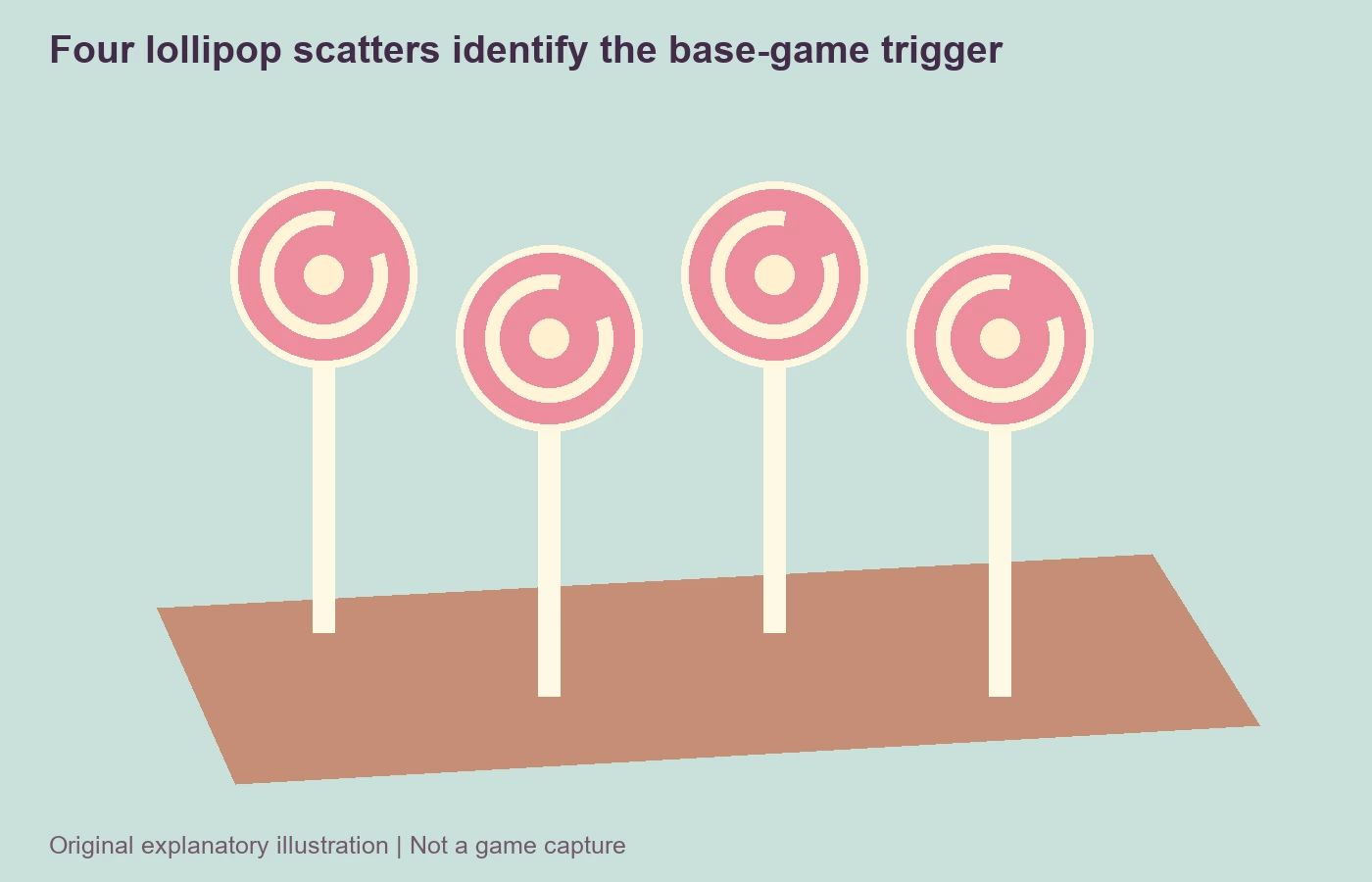
The enlarged lollipop objects identify the feature symbol and the four-scatter base-game condition. Original illustration. Lollipop scatters are associated with the free-spin trigger, rather than the ordinary fruit-count explanation. The official material states that at least four lollipops in the base game unlock ten free spins. During the bonus game, at least three lollipops award five further free spins. The phase and the threshold must therefore be read together. [sweet-product][sweet-launch]
Our third illustration presents four large lollipops on a physical display stand. It focuses on the trigger symbol as an object, not another full game board. A small accompanying label identifies the base-game example; it does not turn the picture into a record of a triggered feature. The illustration deliberately avoids showing an account, a stake control or an invitation to start a round.
A useful verbal comparison begins with “base game” or “during the bonus”, then gives the applicable scatter condition. Omitting that first phrase can merge two different rules into a misleading single statement. The count of four in one phase and three in another should not be turned into an invented universal threshold.
The two official pages describe the same named title, but they serve different purposes. The launch announcement records the release’s feature summary and historical context; the product page is the developer’s product reference retrieved on our checking date. Agreement between them supports the stated feature description. It does not establish that an unrelated title with similar candy artwork uses the same conditions.
Add bonus multipliers before interpreting the total
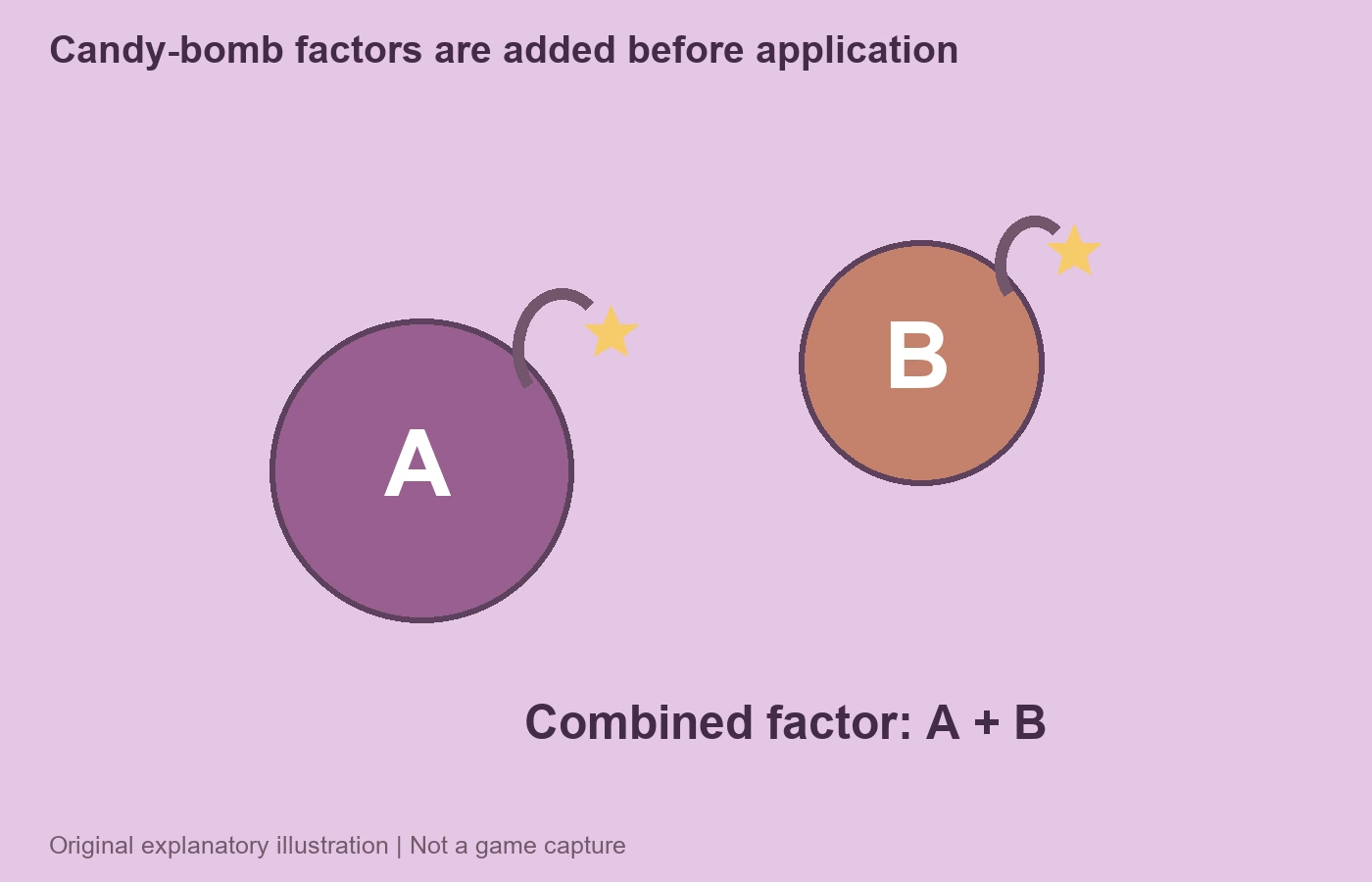
The symbolic bomb labels explain addition of factors without inventing a completed game or an actual multiplier value. Original illustration. The bonus-game description says candy-bomb multipliers stay visible through tumbles, are added together and are applied to the total tumble win. The publisher gives a maximum individual multiplier value of one thousand for this release. A ceiling describes a possible bound in the documented feature, rather than the value a reader should expect to see. [sweet-product]
The illustrated bombs use symbolic letter values instead of manufactured game results. One bomb carries A and another B; a separate result area is labelled as their combined multiplier. This explains the addition relationship while avoiding a made-up live round or an assertion about how often particular values occur. The objects are original cartoon confectionery, not copies of the developer’s graphical assets.
A numerical example would need to identify the tumble amount and every relevant multiplier before calculating a total. This article does not supply those missing inputs. More importantly, a past displayed factor would not establish the factor in another event. The feature description tells a reader how to classify information on a completed display, not how to predict a future sequence.
Use release context without turning it into availability advice
The launch announcement dates Sweet Bonanza 1000 to 3 June 2024 and identifies it as a sequel to Sweet Bonanza. Its announced maximum is 25,000 times the bet. We retain that figure as a scoped product fact, with no conversion into pesos, no example spending plan and no claim about a typical outcome. [sweet-launch]
The complete title should remain attached to notes about the grid, scatter thresholds and multiplier feature. If an operator displays a different suffix, those notes need a new source check. A similar illustration or familiar theme is insufficient to establish that two builds share the same information. This article concerns the named release, rather than a comparison of the wider series.
For Philippine readers, a developer product page establishes what the supplier says about its game; it does not establish that a platform is authorised to offer it locally. Check the exact operator and domain through PAGCOR’s current official records. That separate verification is not performed by a game logo or a screenshot, and this publication does not claim to hold a gambling licence.
Check the count before naming an award
The original drawing places eight apple shapes across five rows: two in the first, two in the second, one in the third, one in the fourth and two in the fifth. The sum is eight, although none of those small local groups contains eight objects by itself. This is the reason a pays-anywhere illustration should keep the whole relevant display in view. The exercise describes our diagram and does not claim those particular positions occurred in a played round.
Counting the same fruit twice would distort the example. A caption should therefore refer to one completed arrangement, rather than combining objects from a before picture and an after picture. Keeping a fixed boundary around the arrangement makes this easier for a reader to check. It establishes what has been counted while leaving the actual paytable value unfilled.
Reader questions
- Must the ordinary matching symbols touch?
- The developer describes a pays-anywhere format, with at least eight matching fruit or candy symbols. The illustration deliberately separates matching shapes to explain the count. It does not supply the paytable value or depict a played sequence.
- Are the base and bonus lollipop thresholds identical?
- No. The official pages describe at least four lollipops for ten free spins from the base game, and at least three during the bonus for five additional free spins. The phase must accompany the count when describing the condition.
- How are bonus multipliers described?
- The product explanation says they remain visible through tumbles, are added together and then applied to the total tumble win. Our bombs use letters as symbolic factors, so the drawing demonstrates that relationship without presenting a fabricated result.
- Does the advertised maximum describe a normal session?
- No. The 25,000-times figure is the announced ceiling for Sweet Bonanza 1000. It is neither an expected session outcome nor a result observed by this publication. The source also does not establish local platform authorisation.